Mouthwash is one of those oral care products almost everyone owns—but many people aren’t quite sure what it actually does. Some use it daily. Others skip it entirely. And plenty of patients ask us the same question at Premier Smiles in Bellevue:
“If I already brush and floss, do I really need mouthwash?”
The short answer? Mouthwash can help—but only when used the right way and for the right reasons. It’s not a replacement for brushing or flossing, but it can play a valuable supporting role in a healthy oral hygiene routine.
Let’s break down what mouthwash does, what it doesn’t do, and how Bellevue patients can use it effectively.
What Mouthwash Is Designed to Do
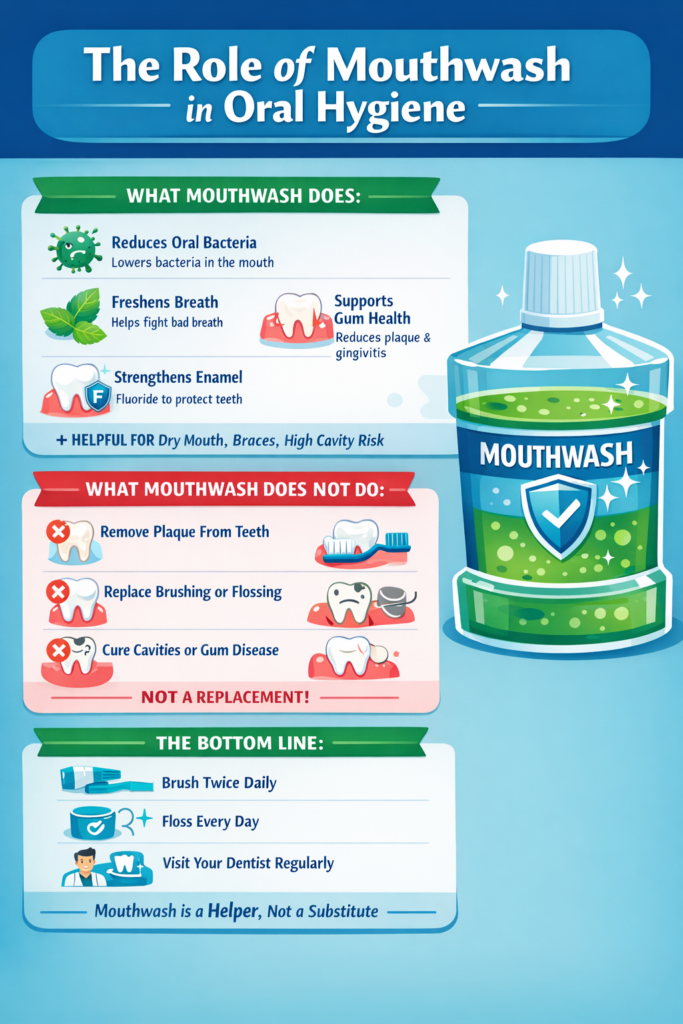
Mouthwash (also called oral rinse) is a liquid product designed to:
- Reduce oral bacteria
- Freshen breath
- Support gum health
- Strengthen enamel (in some formulas)
Different types of mouthwash are created for different goals, which is why choosing the right one matters.
What Mouthwash Cannot Replace
This is important to clarify early:
Mouthwash does not replace brushing or flossing.
Even the best mouthwash:
- Cannot remove plaque stuck to teeth
- Cannot clean between teeth like floss
- Cannot stop cavities on its own
Think of mouthwash as a supporting player, not the star of your oral hygiene routine.
The Different Types of Mouthwash (And Why It Matters)
Not all mouthwashes work the same way. At Premier Smiles in Bellevue, we often help patients choose a rinse based on their specific needs.
1. Cosmetic Mouthwash
These focus mainly on:
- Freshening breath
- Temporary odor control
They don’t treat underlying issues like gum disease or decay—but they can be helpful for confidence and comfort.
2. Therapeutic Mouthwash
These are designed to actively improve oral health and may:
- Reduce plaque and gingivitis
- Kill bacteria
- Strengthen enamel with fluoride
Therapeutic mouthwashes are often recommended for patients prone to cavities or gum inflammation.
3. Alcohol-Free Mouthwash
Many patients assume alcohol equals “clean,” but that’s not always true.
Alcohol-free mouthwash:
- Is gentler on gums
- Reduces dryness
- Is better for patients with sensitive mouths or dry mouth
For many Bellevue patients, alcohol-free options are the better long-term choice.
4. Prescription Mouthwash
In certain cases—such as advanced gum disease or after dental procedures—we may recommend a prescription rinse to:
- Control infection
- Promote healing
- Reduce inflammation
How Mouthwash Supports Oral Hygiene
When used correctly, mouthwash can provide real benefits:
✔ Reduces Harmful Bacteria
Mouthwash can lower bacterial levels in areas brushing may miss, especially around the gumline.
✔ Helps Prevent Gum Disease
Therapeutic rinses can reduce gingivitis and inflammation when paired with brushing and flossing.
✔ Strengthens Enamel
Fluoride mouthwash helps remineralise enamel and protect against cavities.
✔ Improves Breath
By reducing odour-causing bacteria, mouthwash helps keep breath fresher for longer.
Common Mouthwash Mistakes We See
Even well-meaning patients can use mouthwash incorrectly. Some common mistakes include:
- Rinsing immediately after brushing (washing away fluoride toothpaste)
- Using mouthwash instead of flossing
- Choosing overly harsh or alcohol-heavy formulas
- Overusing mouthwash multiple times a day
At Premier Smiles in Bellevue, we help patients fine-tune their routine so mouthwash helps—not harms—their oral health.
When Mouthwash Is Especially Helpful
Mouthwash can be particularly beneficial if you:
- Are prone to cavities
- Have early gum disease
- Experience dry mouth
- Wear braces or aligners
- Have difficulty flossing consistently
That said, it works best as part of a personalised oral care plan, not a one-size-fits-all habit.
Is Mouthwash Safe for Daily Use?
For most people, yes—if you’re using the right type.
Daily use is generally safe when:
- The formula matches your oral health needs
- It’s alcohol-free or low-irritation
- It’s used as directed
If you’re unsure, your dentist can help you choose a mouthwash that supports your specific goals.
The Dentist’s Perspective: Balance Is Key
At Premier Smiles in Bellevue, we focus on prevention, education, and long-term oral health. Mouthwash is a useful tool—but only when combined with:
- Proper brushing technique
- Daily flossing
- Regular dental cleanings
- Routine dental exams
No mouthwash can compensate for skipped dental visits or untreated oral issues.
Final Thoughts: Does Mouthwash Really Help?
Yes—mouthwash can help, but it’s most effective when:
- Used correctly
- Chosen thoughtfully
- Paired with strong daily habits
If you’re unsure whether mouthwash belongs in your routine, the team at Premier Smiles in Bellevue is happy to guide you with personalised advice.
A healthy smile isn’t about doing more—it’s about doing the right things consistently.
FAQs: Mouthwash and Oral Hygiene
Is mouthwash really necessary?
Not for everyone—but it can be very helpful depending on your oral health, cavity risk, and gum condition.
Should I use mouthwash before or after brushing?
Usually after flossing and brushing—but wait at least 30 minutes if you use fluoride toothpaste, unless your dentist advises otherwise.
Can mouthwash replace flossing?
No. Mouthwash cannot remove plaque between teeth.
Is alcohol-free mouthwash better?
For many patients, yes—especially those with sensitive gums or dry mouth.
How do I choose the right mouthwash?
Your dentist can recommend the best option based on your specific needs.