You brush twice a day.
You floss.
You try to eat reasonably well.
So why do cavities keep coming back?
At Premier Smiles of Bellevue, this is one of the most common (and frustrating) concerns we hear from patients. Recurrent cavities can feel confusing, discouraging, and unfair—especially when you’re doing “everything right”. The truth is, oral hygiene is only one piece of the puzzle. Cavities are influenced by a mix of biology, habits, dental anatomy, and even past dental work.
Let’s break down the real reasons cavities can keep returning—and what can be done to finally stop the cycle.
First, What Is a Recurrent Cavity?
A recurrent cavity is tooth decay that develops:
- Around or beneath an existing filling or crown
- On a tooth that has already been treated
- Repeatedly in the same areas of the mouth
These cavities often form silently, meaning they may not cause pain until the decay is advanced. That’s why regular dental exams in Bellevue are so important—even if your teeth feel fine.
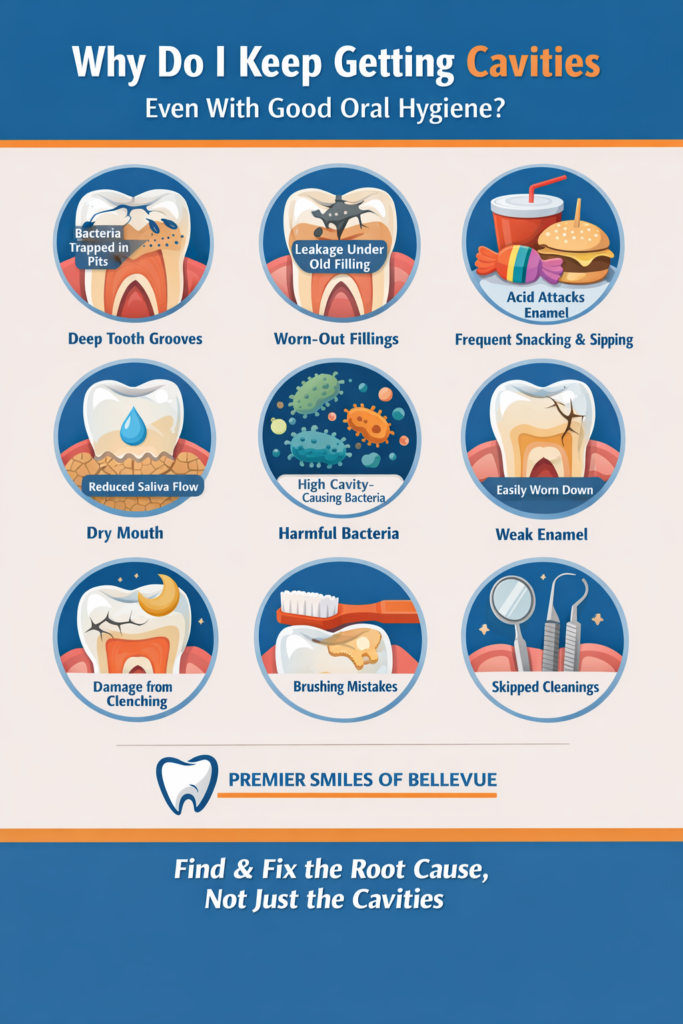
1. Deep Grooves and Tooth Anatomy Trap Bacteria
Some teeth are simply harder to keep clean than others.
Molars and premolars often have:
- Deep pits and fissures
- Narrow grooves that toothbrush bristles can’t fully reach
Even with excellent brushing, bacteria and food particles can settle into these microscopic areas and slowly cause decay.
What helps:
Dental sealants, professional cleanings, and targeted fluoride treatments can protect these vulnerable spots.
2. Old Fillings Can Hide New Decay
Fillings don’t last forever.
Over time, they can:
- Wear down
- Develop tiny gaps
- Pull away slightly from the tooth
Bacteria can slip into these spaces and cause decay underneath—where it’s invisible to the naked eye.
At Premier Smiles of Bellevue, we use advanced imaging to detect hidden decay beneath old restorations, often before you feel symptoms.
3. Acid Attacks From Frequent Snacking or Sipping
It’s not just what you eat—it’s how often.
Each time you snack or sip:
- Acids attack your enamel for 20–30 minutes
- Your mouth has less time to naturally remineralize
Even healthy foods like fruit, smoothies, or flavoured sparkling water can contribute to frequent acid exposure.
Common cavity-causing habits include:
- Grazing throughout the day
- Sipping coffee or tea for hours
- Frequent sports or energy drinks
4. Dry Mouth Reduces Your Natural Defense System
Saliva is your mouth’s built-in protection system. It:
- Neutralizes acids
- Washes away bacteria
- Helps rebuild enamel
If you have dry mouth, cavities are far more likely—even with good hygiene.
Common causes of dry mouth include:
- Prescription medications
- Stress and anxiety
- Mouth breathing
- Certain medical conditions
Many patients don’t realise they have chronic dry mouth until cavities keep appearing.
5. Harmful Oral Bacteria May Be Dominating
Not all mouths have the same bacteria balance.
Some people naturally carry higher levels of cavity-causing bacteria like Streptococcus mutans. These bacteria:
- Thrive on sugars and starches
- Produce strong acids
- Spread easily to vulnerable areas
This means two people with identical brushing habits can have very different cavity risks.
6. Brushing Technique Matters More Than You Think
Good intentions don’t always equal effective cleaning.
Common issues we see:
- Brushing too hard (damages enamel and gums)
- Missing gumline areas
- Rushing through brushing
- Not flossing thoroughly
At Premier Smiles of Bellevue, we often help patients fine-tune their technique—small adjustments can make a big difference.
7. Enamel Can Be Naturally Weak or Worn Down
Enamel doesn’t regenerate.
Factors that weaken it include:
- Genetics
- Acid reflux
- Teeth grinding
- Past orthodontic treatment
- Aggressive whitening products
Once enamel is compromised, teeth become more vulnerable to decay—even with good care.
8. Nighttime Grinding and Clenching Create Micro-Damage
Teeth grinding (bruxism) can:
- Create microscopic cracks
- Wear down enamel
- Make teeth easier targets for bacteria
Many people grind without realizing it, especially during sleep.
A custom night guard can protect your teeth and help prevent recurrent cavities caused by structural damage.
9. Inconsistent Professional Cleanings
Home care is essential—but it can’t replace professional care.
Even excellent brushers miss:
- Tartar buildup
- Subtle decay between teeth
- Early warning signs
Routine dental cleanings and exams in Bellevue allow us to catch problems before they turn into repeat cavities.
How Premier Smiles of Bellevue Helps Stop Recurrent Cavities
We don’t just “fill holes.” We look for why cavities are forming.
Our approach includes:
- Thorough exams and digital imaging
- Evaluating past dental work
- Saliva and risk assessments
- Personalized prevention plans
- Targeted fluoride and sealants
Our goal is long-term oral health—not temporary fixes.
Take the Next Step Toward Cavity-Free Confidence
If you’re tired of dealing with repeat cavities and want answers—not just fillings—Premier Smiles of Bellevue is here to help. We focus on prevention, precision, and personalized care so your smile stays healthy for years to come.
📍 Conveniently located in Bellevue
📞 Schedule your dental exam today
A healthier smile starts with understanding why cavities keep coming back—and fixing the root cause.
FAQs About Recurrent Cavities
Why do I keep getting cavities even though I brush and floss daily?
Brushing and flossing are crucial, but cavities can still form due to factors like dry mouth, deep grooves, old fillings, frequent snacking, or bacterial imbalance.
Can genetics really affect cavity risk?
Yes. Some people have naturally weaker enamel or higher levels of cavity-causing bacteria, making them more prone to decay despite good hygiene.
Are recurrent cavities a sign of poor dental work?
Not necessarily. Even well-done restorations can wear over time. Regular exams help ensure existing fillings and crowns remain protective.
How can I tell if I have a cavity forming?
Early cavities often have no symptoms. Sensitivity, rough edges, or dark spots may appear later. Routine dental visits are the best way to catch them early.
What can I do to prevent cavities long-term?
A personalised plan that includes professional cleanings, diet guidance, fluoride treatments, and addressing underlying issues like dry mouth or grinding is key.