
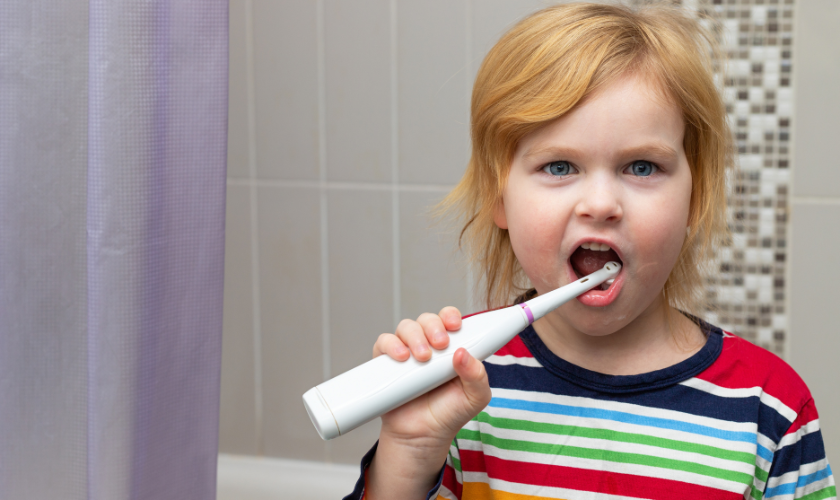
If you’ve ever found yourself standing in a bathroom doorway at 8:30 pm, toothbrush in hand, trying to negotiate with a four-year-old who has suddenly decided that brushing their teeth is the worst thing that has ever happened to them — this blog is for you.
You are not doing anything wrong. You are not alone. And the nightly toothbrushing battle is one of the most universal parenting experiences there is, right up there with the vegetable standoff and the bedtime-is n’t-for-another-hour argument.
But here’s the thing: it doesn’t have to be a battle. And more importantly, it really can’t be one forever — because the habits your kids build around brushing right now will shape the health of their teeth for decades to come. Getting this right matters, not just for the next few years but for their long-term relationship with dental health and self-care.
At Premier Smiles of Bellevue, Dr. Vietnam Huynh and Dr. Thaihoa Huynh work with Bellevue families every day, and the toothbrushing conversation comes up constantly. So here’s the practical, real-world guidance they share with parents — strategies that actually work, without turning bedtime into a negotiation marathon.
Why Kids Resist Brushing — And Why Understanding It Matters
It’s Not Stubbornness — It’s Sensory and Control
Before diving into solutions, it helps to understand what’s actually driving the resistance. For most young children, toothbrushing resistance comes down to two things: sensory experience and autonomy.
The sensation of brushing is genuinely a lot for small children. The taste of toothpaste, the texture of bristles on sensitive gum tissue, the pressure, the foam — these are intense inputs for a nervous system that’s still developing and calibrating. What feels completely normal to an adult can feel overwhelming to a three or four year old, even if they can’t articulate exactly why they don’t like it.
The autonomy piece is equally important. Young children are in a developmental stage where asserting independence is literally part of how their brains are growing. Being told they have to sit still while someone puts something in their mouth — something they have no control over — triggers resistance almost automatically. It’s not defiance for the sake of it. It’s developmental.
Understanding this shifts the approach entirely. Instead of trying to overpower the resistance, the goal becomes making brushing feel less threatening to the senses and giving kids some genuine ownership over the process.
Practical Strategies That Actually Work for Bellevue Families
Let Kids Choose Their Own Gear
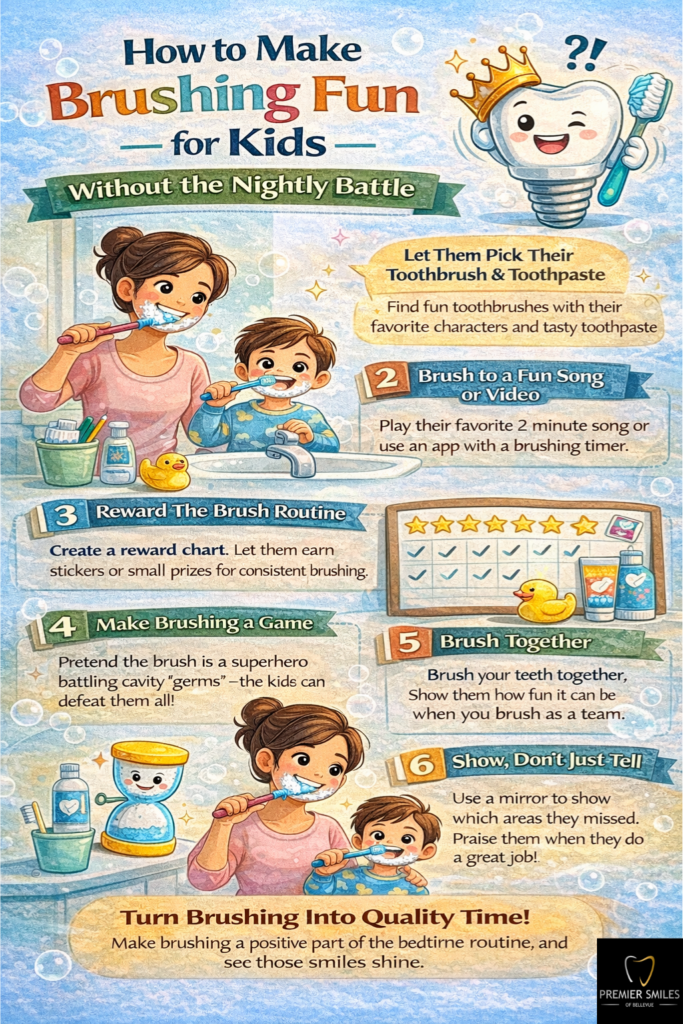
This one is simple and surprisingly effective. When children choose their own toothbrush — the color, the character on the handle, the shape — they develop a sense of ownership over it. It becomes their toothbrush rather than the thing a parent is forcing on them.
The same goes for toothpaste. Most children’s toothpastes come in a range of flavors beyond the standard mint that adults default to. Watermelon, bubblegum, strawberry, and mixed berry are all available in fluoride formulas appropriate for children. Letting your child pick the flavor they want to try turns a source of resistance — the strong taste sensation — into something they actually get to have an opinion about.
Take them to the store and make it a small outing. Let them hold the options, look at them, and choose. The investment is minimal, and the payback in nightly cooperation is significant.
Turn It Into a Two-Minute Game
Two minutes is the recommended brushing time for children, just as it is for adults. Two minutes is also an eternity for a child who wants to be doing literally anything else. Reframing those two minutes as something other than mandatory tooth-cleaning time makes an enormous difference.
There are now dozens of free toothbrushing apps and YouTube videos designed specifically for this. Some features include popular characters brushing alongside your child for exactly two minutes. Others are simply fun timers with music and animations that count down the time. The Brush DJ app and Disney’s Magic Timer are both popular with Bellevue families and work well for a wide age range.
If apps aren’t your thing, a simple sand timer or a favourite two-minute song works just as well. The goal is to give the child something to focus on other than the brushing itself — a target to reach rather than a rule to comply with.
Make It a Family Activity
Children copy what they see. If brushing happens in isolation — the child is taken to the bathroom and told to brush while parents do other things — it reads as a chore, something done because they have to rather than something everyone does.
Brushing together as a family, even if it’s just a parent brushing alongside their child at the same time, normalises it powerfully. When your child sees that mum and dad brush their teeth at the same time every night without complaint, brushing becomes just something humans do rather than something being imposed on them specifically.
In Bellevue households where evenings are rushed — and with the commutes and schedules that come with living in the greater Seattle area, many evenings absolutely are — this might mean adjusting the routine slightly so there’s a shared two-minute window. It’s worth it.
Use a Reward System — But Keep It Simple
Star charts, sticker collections, and small rewards for consistent brushing are genuinely effective for children between roughly three and seven years old. The key is keeping the system simple enough that it doesn’t become another thing to manage, and meaningful enough that the child actually cares about it.
A simple chart on the bathroom mirror with space for a sticker each time they brush — morning and evening — gives children a visual representation of their consistency. After a set number of stickers, a small reward of their choosing reinforces the habit. This doesn’t need to be elaborate or expensive. Extra screen time, choosing the family movie on Friday night, or picking what’s for dinner one night are all meaningful to children without involving sugar rewards that undermine the whole point.
Give Them Some Control Over the Process
Remember the autonomy piece from earlier? Building genuine choice into the brushing routine addresses it directly. Let your child choose which quadrant of their mouth to start with. Let them brush first — even if you’ll go over it again afterward — before you take a turn to finish the job properly. Let them decide whether they want to stand on the step stool or be held up to reach the sink.
None of these choices affects how well the brushing gets done. But they all give the child a real sense of agency over what’s happening, which dramatically reduces the likelihood of a full-scale protest.
For younger children who still need a parent to do the actual brushing, making it feel like a collaborative activity rather than something being done to them shifts the entire dynamic. Ask them to open wide like a lion. Count teeth out loud together. Narrate what you’re doing. Silly voices work surprisingly well for the three-and-under crowd.
When to Bring in Reinforcement
Let the Dentist Be the Expert
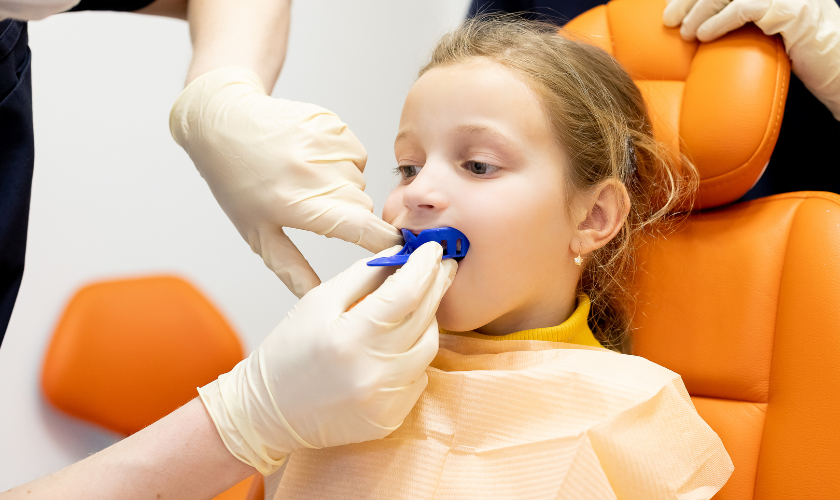
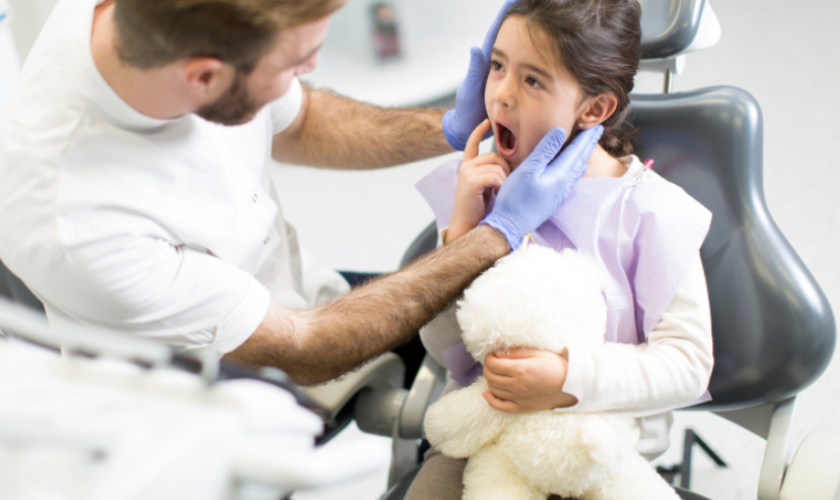
Sometimes — and Bellevue parents will know this scenario — a child is far more willing to follow advice from a dentist than from their own parents. There’s something about the authority of a professional in a clinical setting, speaking directly to the child, that lands differently than the same information coming from mum or dad.
If brushing resistance is persistent, don’t underestimate how much a positive dental visit can help. Dr. Vietnam Huynh and Dr. Thaihoa Huynh take time at every appointment to speak directly with young patients about brushing — showing them the right technique on a model, explaining in child-friendly language why it matters, and making the whole conversation feel exciting rather than prescriptive.
Choosing a trusted Pediatric Dentist in Bellevue who builds a genuine rapport with your child means that the guidance kids receive in the chair reinforces what parents are trying to do at home. When a child hears the same message from their dentist that they hear from their parents — and they like their dentist, and their dentist remembered their favourite colour and asked about their dog — that message carries real weight.
Start the Habit Early
The earlier brushing becomes a normal, expected part of the day, the less resistance you’re likely to encounter as children get older. Dental guidelines recommend starting to clean gums even before teeth appear — a soft cloth or a silicone finger brush gets babies used to the sensation early, so that transitioning to a toothbrush doesn’t feel like a sudden imposition.
If you’re starting the brushing routine with a toddler or slightly older child and facing significant resistance, know that consistency almost always wins over time. Children who experience brushing as a reliable, predictable part of every evening eventually stop fighting it — especially when the experience has been made as positive and low-pressure as possible.
The Long Game Is Worth Playing
The nightly toothbrushing battle feels like a small thing in the context of parenting. But the habits children build around oral hygiene in these early years genuinely follow them. Kids who grow up associating brushing with positive experiences — choice, fun, family time, a kind dentist who makes them feel comfortable — become adults who take dental health seriously.
And that matters enormously. Because the alternative — a lifetime of dental anxiety, skipped appointments, and avoidable decay — starts right here, in these small daily moments at the bathroom sink.
Premier Smiles of Bellevue is here to support Bellevue families through every stage of that journey. If your child is due for a checkup, or if you’d like personalised advice on building better brushing habits at home, we’d love to see you both. Visit us as soon as you can.
FAQs
1. At what age should my Bellevue child start brushing their own teeth independently?
Most children develop the manual dexterity to brush effectively on their own between six and eight years old. Before that, parents should assist or at least check and finish the brushing after the child has had their turn.
2. How much toothpaste should I use for my child?
For children under three, a smear of fluoride toothpaste about the size of a grain of rice is appropriate. For children three to six, a pea-sized amount is the recommendation. More toothpaste doesn’t mean better cleaning — it just means more foam, which can actually make brushing harder for young children to manage comfortably.
How do I know if my child’s brushing is actually effective if I can’t always watch?
Disclosing tablets are a brilliant tool for this — they’re small, chewable tablets that temporarily stain plaque pink or purple, making it immediately visible on the teeth. After your child brushes, having them chew a disclosing tablet shows exactly which areas they missed. It turns checking into a game and gives children concrete visual feedback that’s far more motivating than a parent saying, “you didn’t brush properly.” They’re available at most pharmacies and are safe for children.
4. What if my child has significant dental anxiety and refuses any dental care at all?
Dr. Vietnam Huynh and Dr. Thaihoa Huynh are experienced in working with anxious young patients using a gentle, patient-led approach that never rushes or forces. Starting with a simple, low-pressure visit where nothing clinical happens — just a look around, meeting the team, sitting in the chair — can break the anxiety cycle effectively. Please call us and let us know your child’s specific concerns before the appointment so we can prepare the right approach for them.